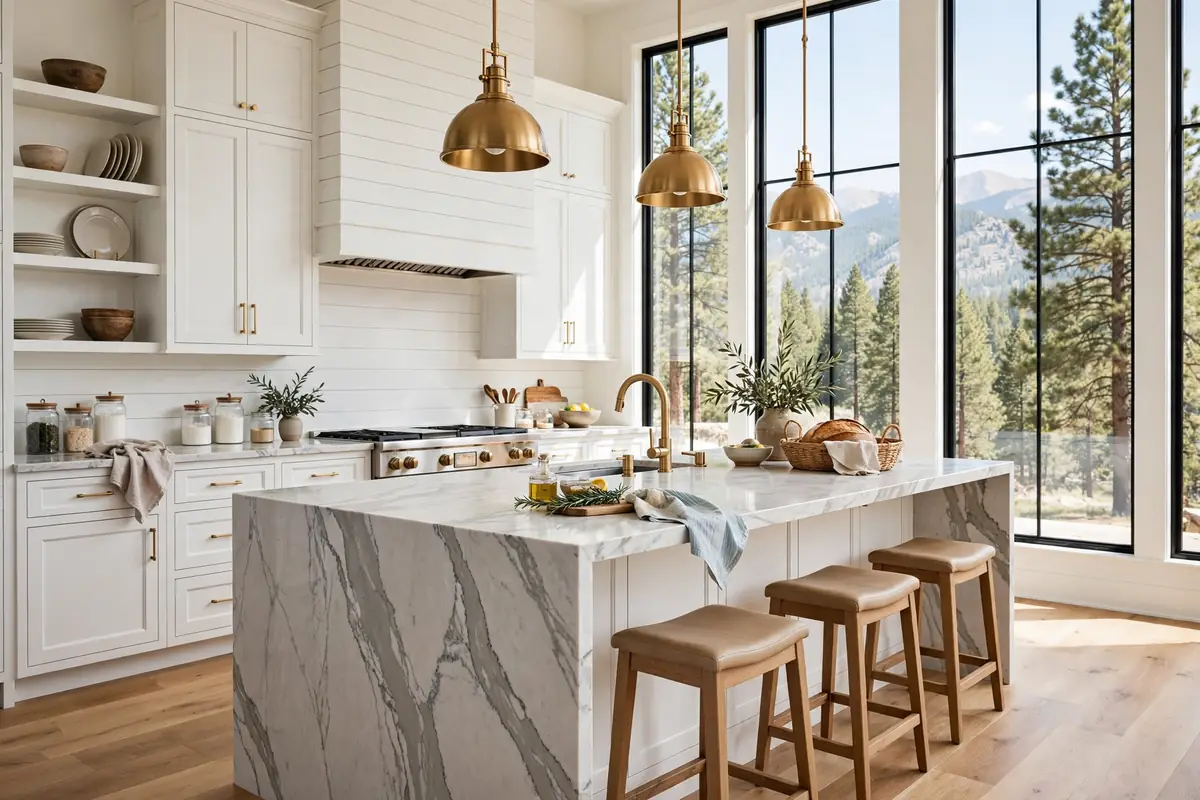
How to Paint Kitchen Cabinets: The DIY Guide That Actually Lasts
Painted cabinets cost a fraction of new ones. This guide walks you through how to paint kitchen cabinets step by step, with the prep work that decides whether the finish lasts five years or five months.
What Painting Cabinets Costs and How Long It Takes
A DIY paint job runs $200 to $600 in materials for an average kitchen. That covers primer, enamel, sandpaper, and supplies. The real cost is your time: 4 to 6 days of work, plus 30 days of cure time before the finish reaches full hardness.
Hiring a professional painter costs $3,000 to $8,000 in Colorado Springs for sprayed cabinets, depending on kitchen size and door count. For the full money picture, see our kitchen remodel cost guide.
Painting is the cheapest cabinet update by far. Refacing runs $4,000 to $15,000 and full replacement runs $12,000 to $40,000. But cheap only wins if the finish lasts. A peeling paint job costs more than the paint you saved.
Buy the Right Paint, Not the Cheapest Paint
Cabinet-grade enamel is the whole game. Use a urethane-modified acrylic or an alkyd enamel. These cure to a hard finish that survives daily touching, cooking steam, and cleaning. Regular wall paint stays soft. It chips within months on cabinet doors.
Pair it with a bonding primer. Shellac-based or high-adhesion primers grip slick factory finishes and stained wood. On oak or dark stain, the primer also blocks tannin bleed, the brown spots that ghost through cheap paint jobs.
Your supply list: a good degreaser, 120 and 220 grit sandpaper, a high-density foam roller, an angled brush for edges, and painter's tape. The $15 gallon of wall paint is the most expensive mistake in this project. It costs you the entire week.
How to Paint Kitchen Cabinets Step by Step
Here is the full process. Every step earns its place. Skip one and you will see it in the finish within a year.
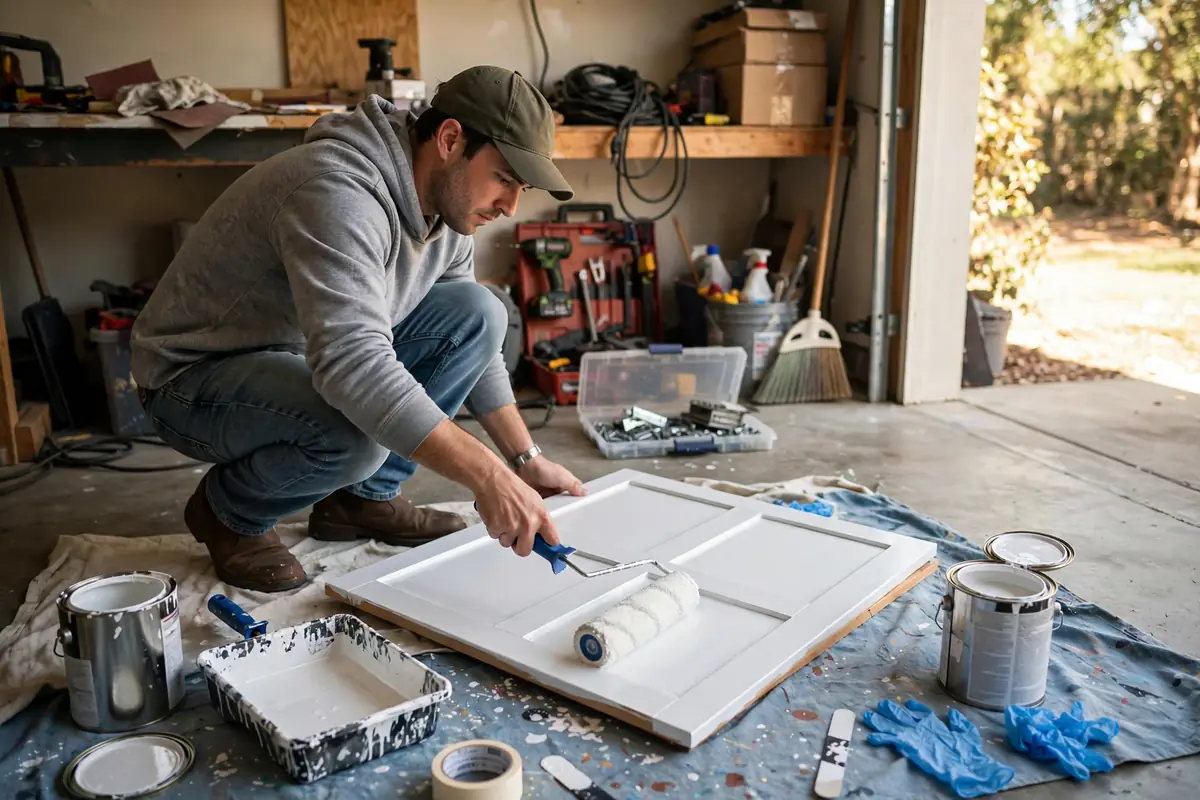
- Take the doors and hardware off. Label every door with painter's tape on the back so it goes home to the right box. Bag the screws and hinges per door. Paint doors flat on sawhorses, never hanging.
- Deep clean every surface. Kitchen grease is invisible until paint peels. Scrub doors, frames, and drawer fronts with degreaser. Rinse and let everything dry fully. This step takes an afternoon. It prevents a disaster.
- Sand everything you will paint. Scuff with 120 grit, then smooth with 220 grit. You are not removing the old finish. You are scratching it so the primer can grip. Wipe the dust off with a tack cloth.
- Prime with a bonding primer. One full coat on all surfaces. Let it dry completely, then lightly sand with 220 grit for a smooth base. Primer is what keeps paint on the wood for years.
- Paint two thin coats of enamel. Thin coats level out and hide brush marks. Thick coats drip and sag. Wait the full recoat time printed on the can between coats. Do not rush this.
- Let it cure, then reinstall. Dry to the touch is not cured. Full cure takes up to 30 days. Reinstall the doors once the paint is dry enough to handle. Be gentle the first month: no scrubbing, no slamming, no leaning heavy pots against the doors.
The Mistakes That Ruin a Paint Job
Most painted cabinets fail for the same five reasons. All of them are avoidable.
- Skipping the degrease. Grease under primer means peeling within a year. Cleaning is the least fun step and the most important one.
- Using wall paint. It never cures hard enough for cabinet doors. It chips where fingers grab every day.
- Skipping primer on stained wood. Tannins bleed through as brown spots. One coat of shellac-based primer stops it cold.
- Painting in a dusty space. Dust lands in wet enamel and stays there forever. Sweep, wait for the air to settle, then paint.
- Rushing the cure. The paint feels dry in hours. It is not hard for weeks. Treat new paint like wet paint for the first month.
If you are weighing DIY against hiring out, our DIY vs pro remodel guide breaks down where your weekends actually pay off.
A Colorado Springs Note: Dry Air Paints Fast
At 6,000 feet with low humidity, paint flashes fast. That is mostly good news: coats dry quicker here than at sea level. The catch is lap marks. Work in small sections and do not overbrush, or the fast-drying edge will show.
Morning painting in a garage beats afternoon heat. Keep the doors out of direct sun while they dry. And sweep the garage well before you start. Colorado dust plus wet enamel is a rough combination.
When Painting Is Not Enough
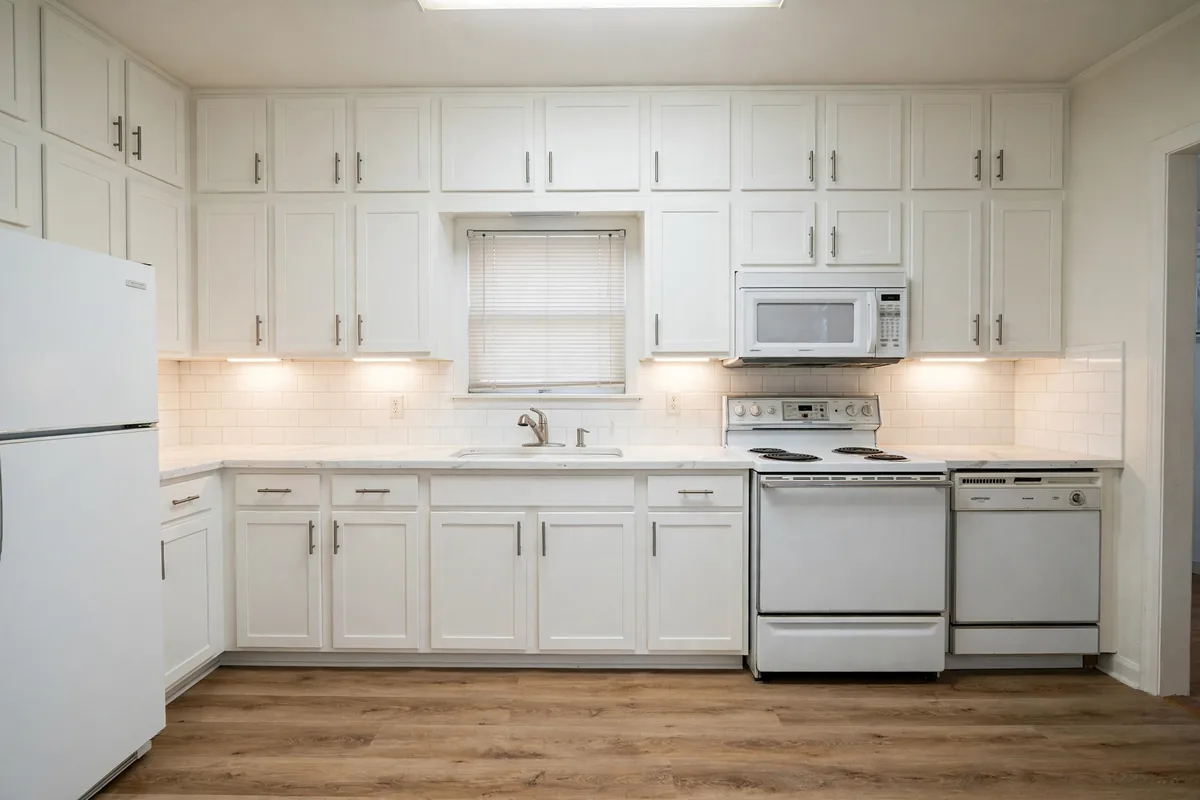
Here is the honest part. Paint changes color and style. It does not fix anything else. It cannot repair swollen boxes, peeling thermofoil, warped doors, or a layout you fight every day.
Paint wins when these are true:
- Your boxes and doors are solid and flat
- You like the door style and just hate the color or finish
- Your budget is under $1,000 and your weekends are free
- You plan to sell in the next few years
Look past paint when these are true:
- Doors are warped, cracked, or the thermofoil is peeling
- You want a different door style, not just a different color
- The boxes are damaged or the layout needs to change
- You want the job done in days, not weeks of garage work
If any of the second list applies, new doors beat new paint. Read about our cabinet refacing service: new doors, drawer fronts, and hardware on your solid boxes, done in one to two weeks. And our refacing vs replacement guide helps you decide how far to go.
Frequently Asked Questions
A DIY paint job takes 4 to 6 days of real work for an average kitchen, plus up to 30 days of cure time before the finish reaches full hardness. A professional crew that sprays cabinets usually finishes in 3 to 5 days on site.
Cabinet-grade enamel is the best paint for kitchen cabinets. Use a urethane-modified acrylic or an alkyd enamel. These cure to a hard, chip-resistant finish that survives daily touching and cleaning. Regular wall paint stays soft and chips within months.
You can use a liquid deglosser with a bonding primer instead of sanding, and it works on factory finishes in good shape. Sanding still gives the strongest bond. Never skip both sanding and primer, or the paint will peel.
A DIY cabinet paint job costs $200 to $600 in materials for an average kitchen: primer, enamel, sandpaper, and supplies. Hiring a professional painter in Colorado Springs costs $3,000 to $8,000 for sprayed cabinets, depending on kitchen size.
Spraying gives the smoothest, most factory-like finish, but it means masking the whole kitchen and ventilating well. Rolling with a high-density foam roller plus a brush for edges looks excellent when the enamel self-levels. Most DIYers roll.
Reface instead of paint when doors are warped, thermofoil is peeling, or you want a different door style. Refacing costs $4,000 to $15,000 and gives you brand-new doors and drawer fronts, not just new color on old doors.