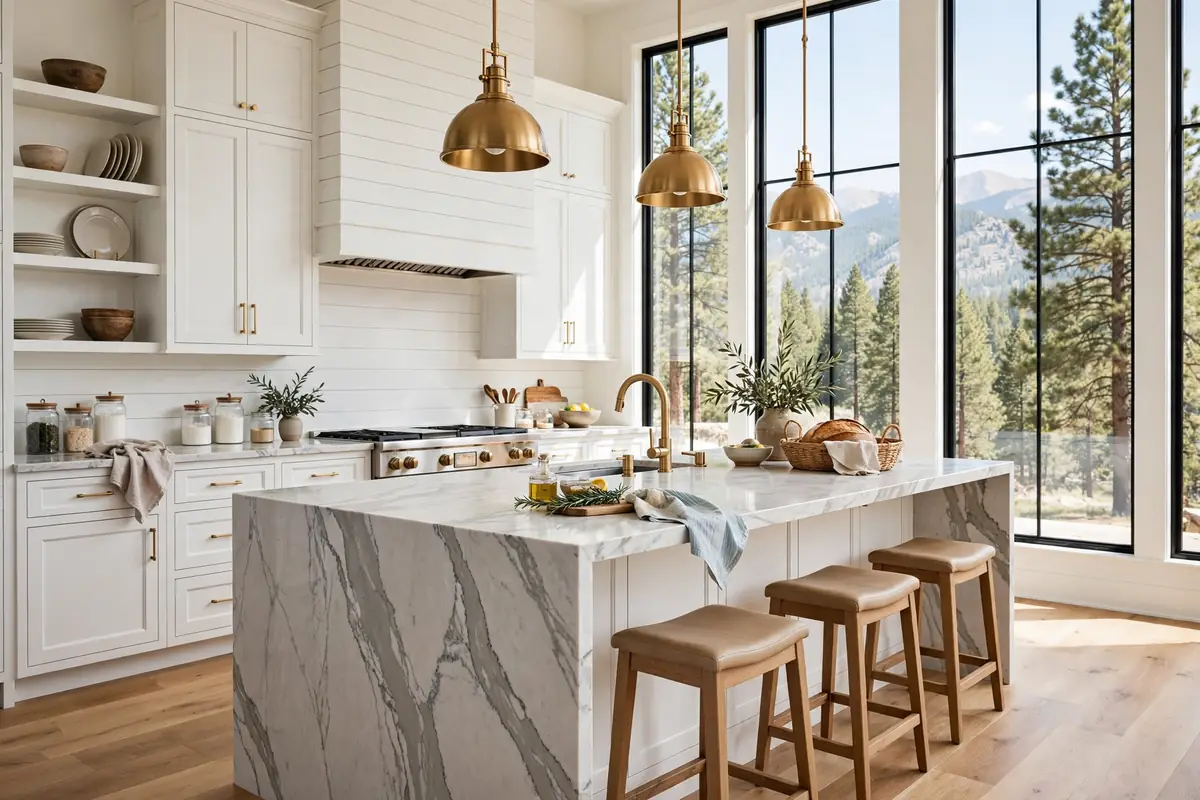
Are Home Depot Cabinets Good Enough? An Honest Answer
Are Home Depot cabinets good enough for your kitchen? The honest answer: sometimes. Stock boxes work fine in some kitchens and fail in others. This guide breaks down stock, semi-custom, and custom tiers honestly, warns you about MDF, and shows when big-box cabinets make sense.
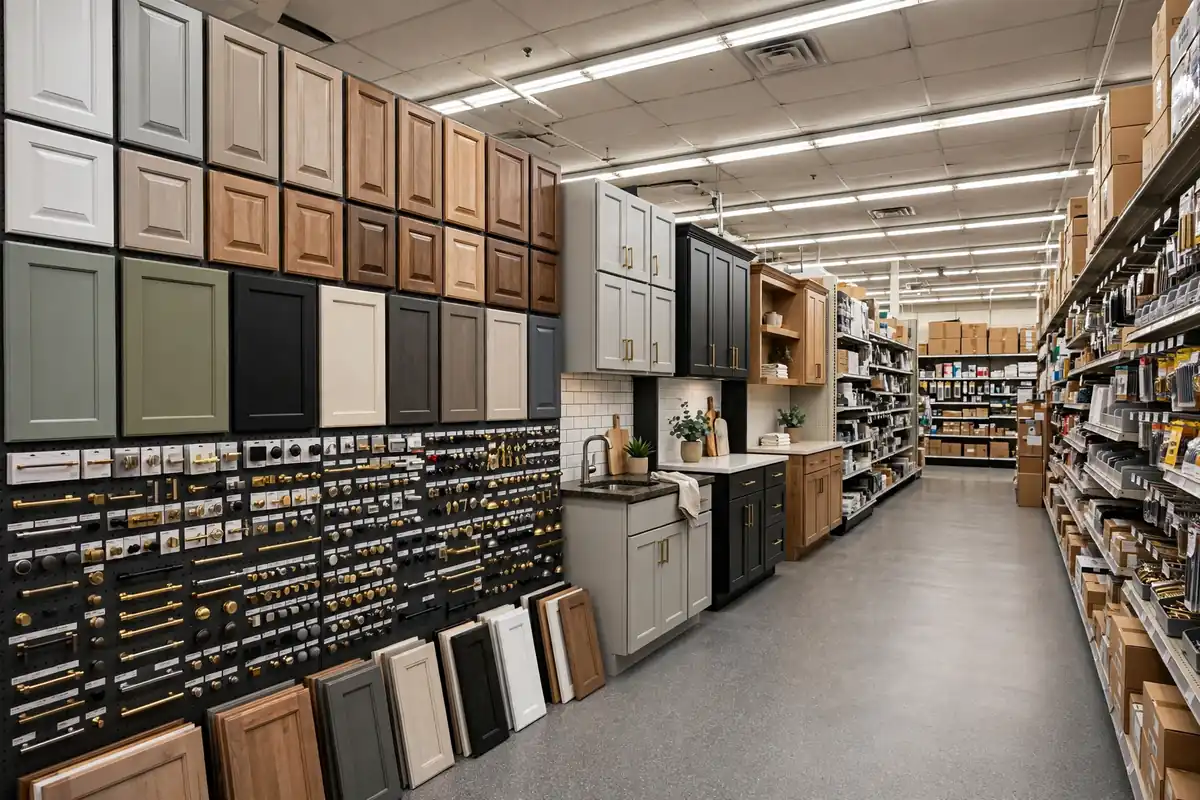
Are Home Depot Cabinets Good? The Three Tiers
Big-box stores sell three quality tiers. The price tag tells you which one you are looking at.
Stock cabinets. Fixed sizes, in stock, cheapest. Particleboard boxes, MDF doors. Lead time: days. Cost: roughly half of semi-custom. Good for rentals, flips, and tight budgets.
Semi-custom cabinets. Sold through the store or a local dealer. More sizes, finishes, and options. Usually plywood boxes with soft-close hardware. Lead time: 4 to 8 weeks. The sweet spot for most homeowners.
Custom cabinets. Built for your exact space by a cabinet maker. Dovetail drawers, premium joinery, any finish. Lead time: 8 to 14 weeks. Highest cost, longest life.
Each step up roughly doubles the price. But the installed cost gap shrinks fast. Fillers, trim, and installation labor apply to every tier.
The MDF Warning
MDF is medium-density fiberboard. It paints beautifully. It costs less than hardwood. So what is the problem?
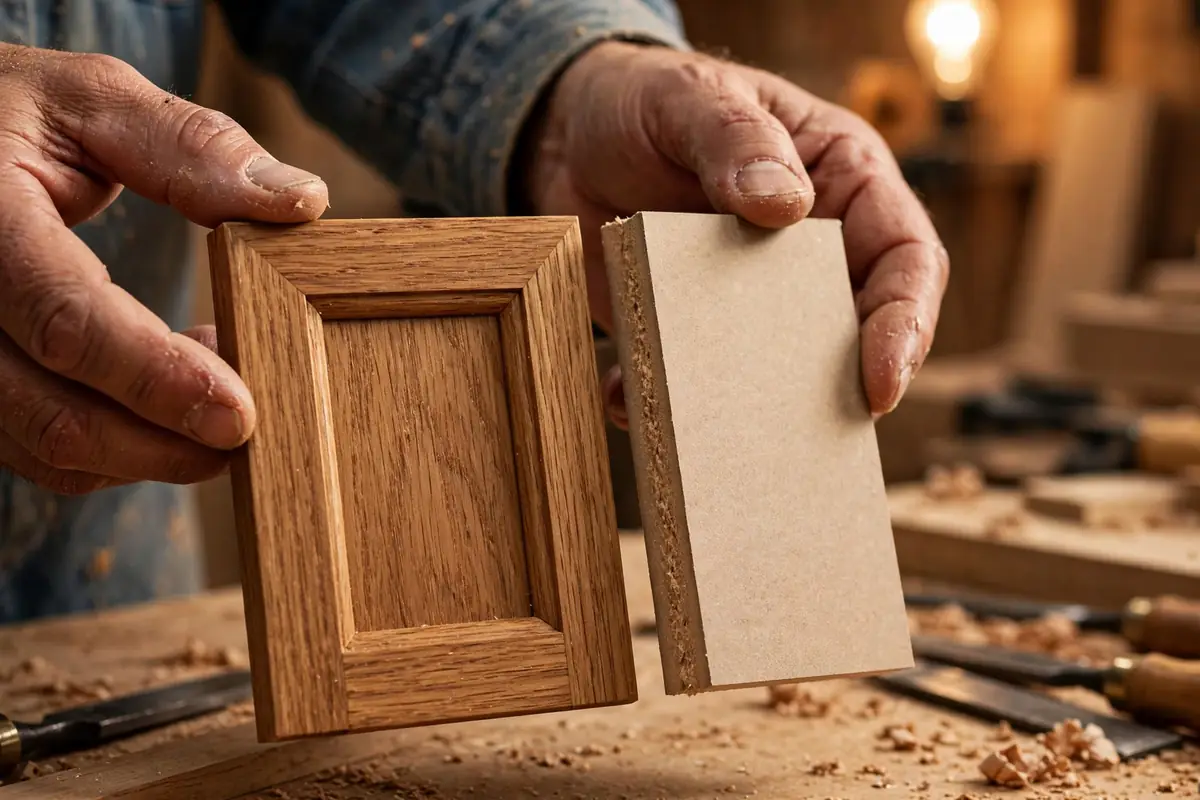
Water. MDF swells and crumbles when it absorbs moisture. MDF doors are fine in dry zones. MDF in sink bases is the danger. One slow plumbing leak under the sink turns a particleboard box into mush. That is why our cabinet installation service specs plywood sink bases on every job, even in budget tiers.
When Big-Box Cabinets Make Sense
Big-box stock cabinets are a smart buy in three cases.
Rental properties. Tenants do not need 40-year cabinets. Stock boxes hit the price point and look clean.
Quick flips. If you are selling within two years, stock cabinets with good hardware photograph well. Put the savings toward countertops buyers notice.
Standard layouts. If your kitchen uses common sizes with no odd corners, stock cabinets fit with minimal filler. Weird angles and tall ceilings need semi-custom or custom.
When to Skip the Big Box
Walk past the aisle when any of these are true.
Your forever home. Stock cabinets last 10 to 15 years in a busy kitchen. Well-built plywood cabinets last 25 to 50. Buy once for the house you are keeping.
Moisture-prone spots. Big families, splashy cooks, homes with past leak issues. Plywood boxes and sealed sink bases pay for themselves.
Tricky layouts. Angled walls, tall ceilings, and narrow gaps need custom sizing. Forcing stock boxes into odd spaces wastes more in filler and labor than semi-custom costs.
Resale in a premium neighborhood. Buyers in higher-end areas open doors and check boxes. Flimsy stock cabinets read cheap. Read our refacing vs replacement guide if your boxes are solid but dated.
How to Compare Apples to Apples
Never compare box prices. Compare installed totals with the same specs: box material, door style, drawer hardware, soft-close, finish, delivery, and install labor.
Get three quotes. One from the big box, one from a local cabinet dealer, one from a remodeling contractor. Local options often land within 10 percent on semi-custom, with better design help and one accountable installer.
Frequently Asked Questions
Home Depot cabinets are fine for budget projects and rental-grade kitchens. Their stock lines use particleboard boxes and MDF doors, which work until moisture gets in. Semi-custom lines sold through the store are much better built. They are good enough when budget leads and the layout is standard.
Stock big-box cabinets typically last 10 to 15 years in a busy family kitchen. Moisture is the main killer: particleboard swells when wet. Well-built semi-custom or custom cabinets last 25 to 50 years. Keep sink bases dry and the difference matters less.
MDF is medium-density fiberboard, an engineered wood product. It paints smoothly and costs less than hardwood. The warning: MDF swells and crumbles when it absorbs water. MDF doors are fine; MDF in sink bases and floor-level panels is the risk. Plywood boxes resist moisture far better.
Stock cabinets come in fixed sizes off the shelf, cheapest and fastest. Semi-custom cabinets offer more sizes, finishes, and options with better construction, usually plywood boxes. Custom cabinets are built to your exact space with premium joinery. Each step up roughly doubles the cost.
Home Depot stock cabinets cost less upfront, often half the price of semi-custom. But installation, fillers, and upgrades close the gap. Local shops and contractors can match big-box prices on semi-custom lines while giving you design help and one point of accountability. Always compare installed totals, not box prices.
Related reading: Quartz vs Granite vs Quartzite: The Countertop Guide and Cabinet Refacing vs Replacement.