Quartz vs Granite vs Quartzite: The Countertop Guide for Busy Families
The quartz vs granite countertops debate never ends. Both look great in the showroom. Only one fits your real life. This guide compares the two on cost, sealing, stains, heat, and Colorado sun. It also covers where quartzite fits, so you pick once and never regret it.
Quartz vs Granite Countertops: Head-to-Head Comparison
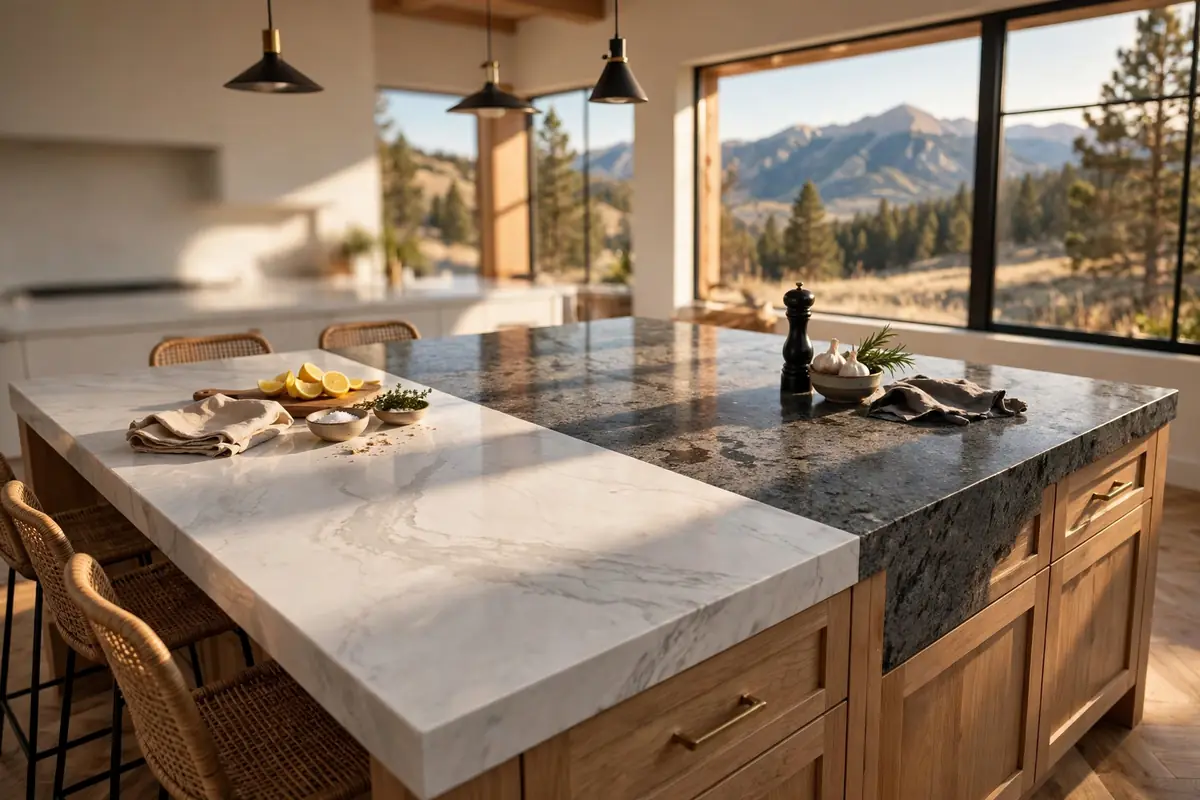
Start with the basics. Quartz is engineered. Factories crush quartz crystal and bind it with resin. Granite is a natural stone cut straight from a quarry. That one difference drives everything else.
Quartz is nonporous. Spills sit on top. Granite is porous. Spills can soak in. That is why granite needs a sealer and quartz does not. The National Kitchen and Bath Association lists stain resistance as the top countertop concern for households with children.
| Factor | Quartz | Granite | Quartzite |
|---|---|---|---|
| Needs sealing | Never | Yearly | Yearly |
| Stain resistance | Excellent | Good if sealed | Good if sealed |
| Heat resistance | Fair (resin can scorch) | Excellent | Excellent |
| Pattern consistency | Very consistent | Unique slabs | Unique slabs |
| 2026 installed cost | $75 to $120/sq ft | $65 to $100/sq ft | $100 to $160/sq ft |
After you compare, the next step is countertop installation in Colorado Springs from a crew that templates digitally and sets seams tight.
The Sealing Truth About Granite
Sealing is not hard. It takes about 30 minutes once a year. But be honest with yourself. Will you do it? Many homeowners skip it. Then red wine and cooking oil leave permanent marks.
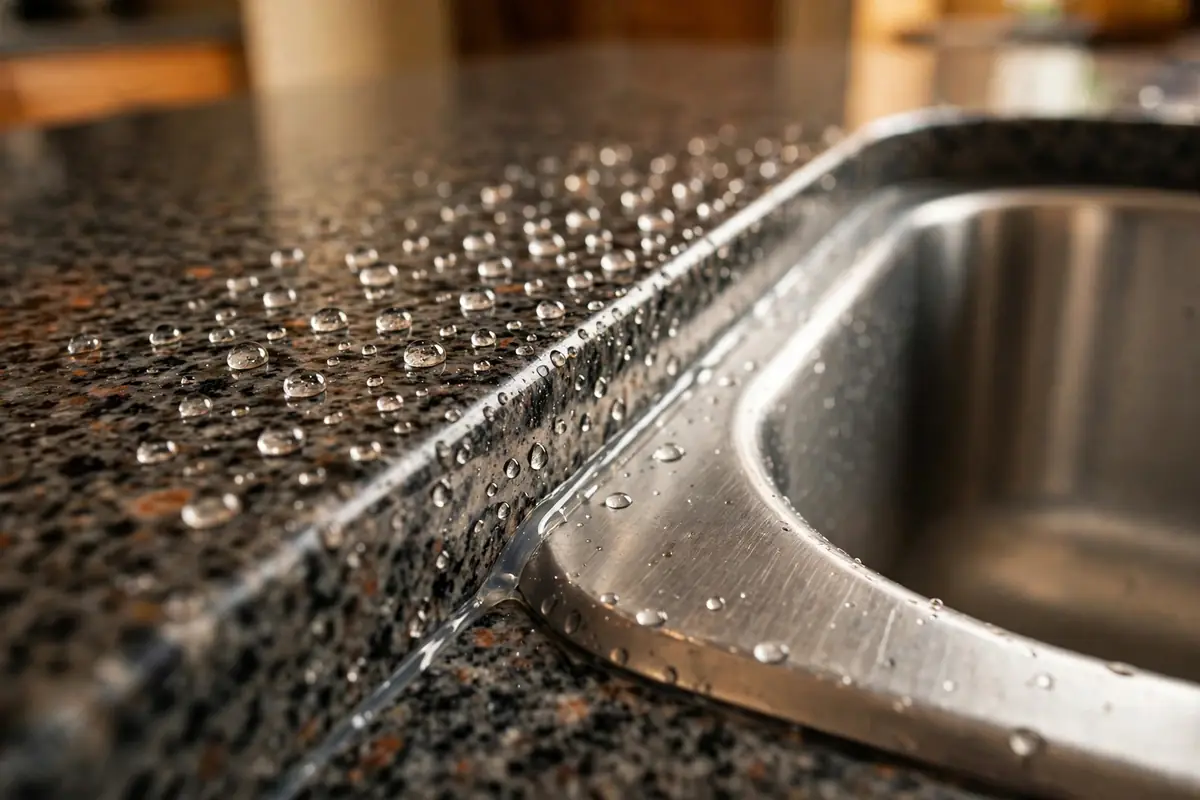
Try the water test today if you already have granite. Flick a few drops on the surface. Beading means the seal holds. Darkening means water is soaking in. That is your sign to reseal this weekend.
Where Quartzite Fits In
Quartzite is the sleeper pick. It is a natural stone, like granite, but much harder. It looks like marble, with soft dramatic veining. It handles heat like a champ.
So why does everyone not buy it? Price and confusion. Quartzite costs more to cut and install. It is also easy to confuse with marble, which is much softer. Some slabs labeled quartzite are actually marble. Always check the stone name with your fabricator before you pay.
Consumer Reports notes that harder stones like quartzite and granite rank highest for scratch resistance in kitchen testing. If you want natural stone drama with near-bulletproof durability, quartzite is your answer.
Colorado Sun: Why UV Changes the Math
Here is the local wrinkle. Colorado gets over 300 days of sunshine a year. Some quartz resins react to UV light and yellow over time. This hits slabs near big south-facing windows and glass doors the hardest.
If your kitchen bathes in sun, ask suppliers for UV-stable quartz lines. Or choose granite or quartzite for those sun-blasted runs. The right quartz countertops for Colorado homes account for your actual window exposure, not just the showroom sample.
Which Countertop Should Your Family Pick?
Run this quick test. Answer honestly.
You cook daily with kids underfoot. Pick quartz. Zero maintenance wins when life is chaos. Spills wipe up. No sealing calendar to forget.
You set hot pans down without thinking. Pick granite. It shrugs off heat that can scorch quartz resin. Just commit to the yearly seal.
You want the most beautiful kitchen on the block. Pick quartzite. Dramatic veining, extreme hardness, and a price tag to match. Seal it yearly and it will outlive the cabinets.
You are remodeling to sell. Pick quartz in a light neutral. It photographs well and buyers ask for it by name. Pair your new counters with solid cabinet boxes from our cabinet installation team for a full refresh.
What Most People Get Wrong
The biggest myth: quartz is indestructible. It is not. Hot pans can scorch the resin. Harsh cleaners can dull the finish. It is low maintenance, not no maintenance.
The second myth: all granite stains easily. Dense, dark granites resist stains well even with light sealing. The stone varies by slab, so test the actual slab you are buying.
The third myth: price equals quality. A $65 per square foot granite can outlast a $120 quartz in the right kitchen. Match the stone to your habits, not the price tag.
Frequently Asked Questions
Quartz wins for busy families. It never needs sealing, it shrugs off juice spills and tomato sauce, and it comes in consistent patterns that hide wear. Quartzite is the strongest natural stone but costs more. Granite works fine if you commit to yearly sealing.
Most granite needs sealing once a year, some dense slabs can go two. The test is simple: flick water on the surface. If it beads up, the seal is fine. If it soaks in and darkens the stone, it is time to reseal. Skipping sealing lets oil and wine stain permanently.
Some quartz can yellow or discolor in direct UV light because the resin binders react to sun. Colorado gets over 300 days of sunshine, so slabs near big south-facing windows are at risk. Ask your supplier for UV-stable quartz lines, or choose granite or quartzite for sun-blasted spots.
In Colorado Springs in 2026, installed prices run roughly $65 to $100 per square foot for granite, $75 to $120 for quartz, and $100 to $160 for quartzite. Quartzite costs most because it is harder to cut and polish. Edge profiles, sink cutouts, and backsplash runs add to every option.
No. Quartz is an engineered stone made from crushed quartz mixed with resin. Quartzite is a natural stone formed from sandstone under heat and pressure. Quartzite looks like marble but resists scratches and heat far better. It usually needs sealing like granite.
Buyers respond to the overall look, not the stone type. Any of the three in a clean, current style helps a kitchen sell. In mid-range Colorado Springs homes, quartz is the safe crowd-pleaser. In luxury homes near the Broadmoor, a striking quartzite or marble-look slab makes a stronger impression.
Want more remodel wisdom? Read 12 Kitchen Remodel Mistakes That Cost Colorado Springs Homeowners Thousands and 10 Kitchen Trends We Would Talk You Out Of.