
What Living Through a Kitchen Remodel Is Really Like
Living through a kitchen remodel is part camping trip, part endurance sport. The dust, the noise, the endless decisions. But thousands of families do it every year and love the result. This is the honest survival guide.
The Temp Kitchen Checklist
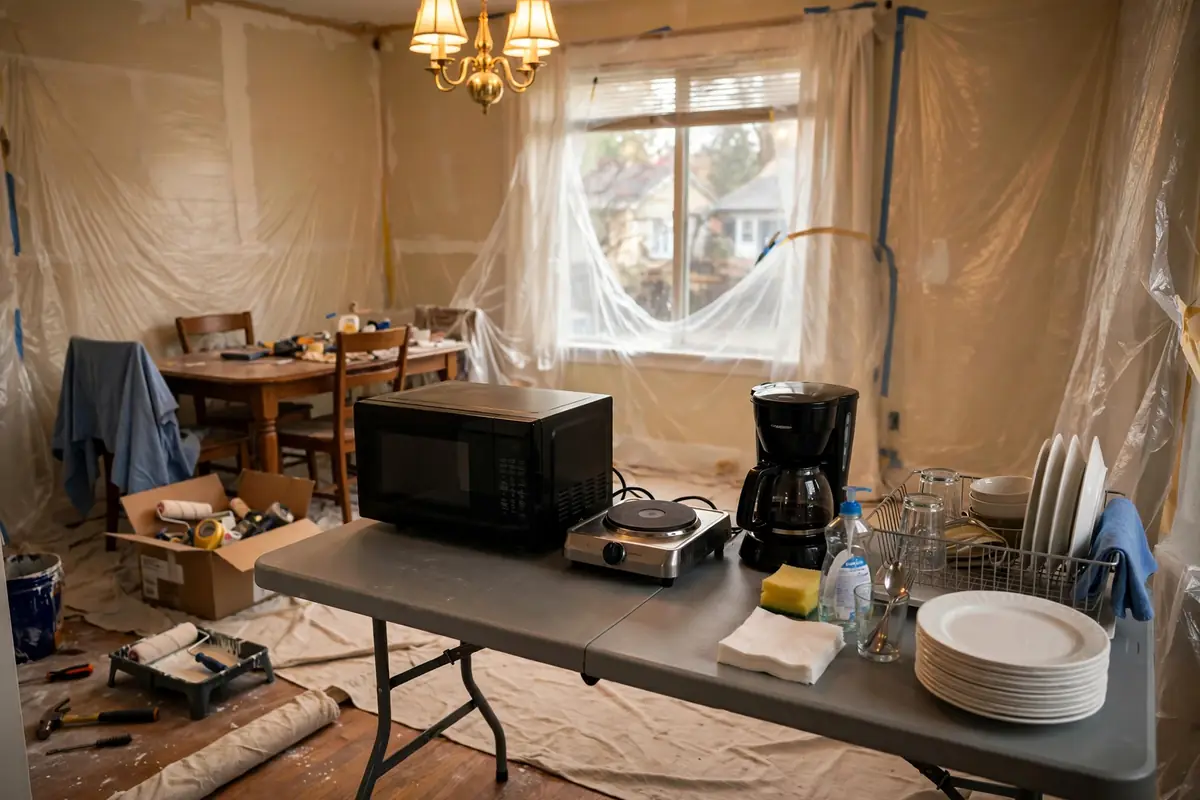
Before demolition day, build your cooking station. A folding table in the dining room or garage works fine. You need less gear than you think.
- Microwave and toaster oven for real meals
- Electric skillet or hot plate for stovetop cooking
- Coffee maker, because morale matters
- Dishwashing station in a bathroom or laundry sink, with a drying rack
- Paper plates, one good knife, one cutting board, a cooler
- A slow cooker and an air fryer if you own them
Plan your meals like a camper. Slow-cooker dinners, sheet-pan toaster oven meals, and one restaurant night a week. Budget for extra takeout. It is a real cost of your kitchen remodel, so plan for it.
The Dust Protocol That Actually Works
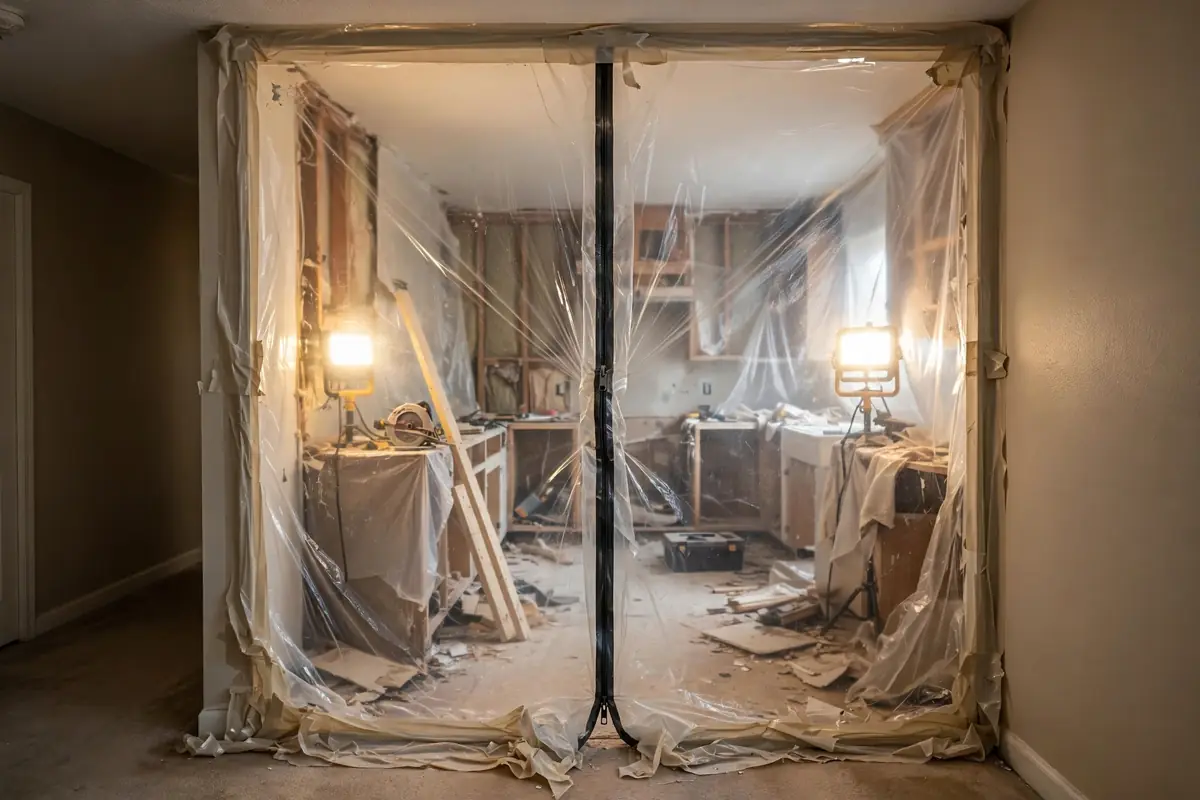
Dust is the part nobody warns you about. Fine drywall dust finds every room in the house. A real dust protocol has three parts, and you should demand all three before hiring anyone.
One: sealed barriers. Heavy plastic sheeting over every doorway, taped at the edges, with a zipper door for access. Not a bedsheet. Not an open doorway. Sealed plastic.
Two: floor protection. Ram board or similar protection on every path the crew walks, from the front door to the kitchen. Your floors should look the same on the last day as the first.
Three: daily cleanup. The crew should sweep and HEPA-vacuum every single day before leaving. A contractor who leaves dust piling up for a week will leave you living in it. Ask about the dust protocol in the interview. If they shrug, keep looking. Our full kitchen remodel service runs a written dust protocol on every job.
Decision Fatigue Is Real (and Expensive)
A kitchen remodel asks you to make hundreds of small choices. Grout color. Switch plates. Hardware finish. Outlet placement. By week three, choosing a faucet feels like filing taxes.
Consumer Reports calls changing your mind mid-project the costliest remodeling mistake. The cure is simple: lock every decision before demolition starts. Pick materials once, write them down, and refuse to reopen them. When a new option tempts you mid-project, remember that each change restarts ordering and reschedules trades.
One trick that works: make all finish decisions in a single two-hour session with your samples in front of you. Decide fast, document everything, and move on. Your future self will thank you.
Living Through a Kitchen Remodel: Week by Week
Week one is exciting. Demolition is loud and fast, and progress is visible. Weeks two and three are the grind: rough plumbing and electrical, drywall dust, no visible glamour. This is when most homeowners question everything.
Week four turns the corner. Cabinets go in and the kitchen starts looking like a kitchen. Countertops template, then install. Backsplash, flooring, paint, and fixtures follow. The final week is punch list: touch-ups, adjustments, and the walkthrough.
Know your timeline before day one. Our kitchen remodel timeline guide breaks down real schedules from 4 weeks to 5 months. And the 12 most common kitchen remodel mistakes will help you avoid the errors that stretch a timeline.
Frequently Asked Questions
Yes, most homeowners do. You need a temporary kitchen setup, a dust control plan, and realistic expectations about noise. Full gut remodels with no running water are the exception. Plan to stay elsewhere during demolition week if plumbing is being relocated.
Set up a folding table in the dining room or garage. Add a microwave, electric skillet or hot plate, coffee maker, and toaster oven. Add a dishwashing station in a bathroom or laundry sink with a drying rack. Stock paper plates, one good knife, one cutting board, and a cooler for basics.
A real dust protocol has three parts. Plastic sheeting sealed over every doorway with zipper access. Floor protection on all paths. Daily cleanup with a HEPA vacuum. Ask your contractor about their dust protocol before hiring. If they shrug, keep looking.
Plan on 4 to 8 weeks without a working kitchen for a typical remodel. Cosmetic refreshes can keep you cooking in 2 to 3 weeks. Full custom remodels may run 10 to 16 weeks. A written timeline from your contractor turns the unknown into a countdown.
Decision fatigue is the exhaustion from making hundreds of small choices: grout color, switch plates, hardware finish, outlet placement. Consumer Reports calls changing your mind mid-project the costliest remodeling mistake. The cure is locking all decisions before demolition starts, then refusing to reopen them.